5th September 1894

To Mrs. G. W. Hale

Annisquam
5 September 1894
Dear Mother,
The news of the arrival of the phonograph from Khetri has not come yet. But I am not anxious, because I just now got another letter from India wherein there is no mention of the photographs I sent, showing that parcels reach later than letters
Herewith I send you an autograph letter of H.H. the Maha-raja of Mysore, the chief Hindu king in India. You may see on the map [that] his territory occupies a very large portion of southern India.
I am very glad that he is slowly being gained over to my side. If he wills, he can set all my plans to work in five days. He has an income of $150 million dollars; think of that.
May Jagadamba [the Mother of the Universe] turn his mind towards the good work. He says he quite appreciates my good words–they were about my plans for educating the poor. Hope he will soon show it in material shape.
My love to all. Why the babies do not prattle?
Your son,
Vivekananda

To Manmatha Nath Bhattacharya

{original in Bengali}

U.S.A.
5th September, 1894.

Dear Mr. Bhattacharya

I was much pleased to read your affectionate letter. I shall make inquiries about the weaving machine as soon as I can, and let you know. Now I am resting at Annisquam, a village on the seacoast; soon I shall go to the city and attend to the matter of the machine. These seaside places are filled with people during the summer; some come to bathe in the sea, some to take rest, and some to catch husbands.

There is a strong sense of decorum in this country.
You have to keep yourself always covered from neck to foot in the presence of women. You cannot so much as mention the normal functions of the body: nobody knows when anyone goes to the toilet one has to live so circumspectly. In this country, you can blow your nose a thousand times into your handkerchief-there is no harm in that; but it is highly uncivilised to belch. Women sometimes are not embarrassed to expose their bodies above the waist you must have seen the kind of low?cut gown they wear but they say that to go bare?foot is as bad as being naked. Just as we always dwell on the soul, so they take care of the body, and there is no end to the cleaning and embellishing of it. One who fails to do this has no place in society.
Our method of cooking with cow?dung fuel and eating on the floor they consider eating like pigs: they say that the Hindus have no sense of disgust and that, like pigs, they eat cow?dung. The word “cow?dung” is taboo in English. On the other hand, numbers of people will drink water with the same glass without thinking of washing it, and they rarely observe the rule that things must be washed before cooking. But should the clothes of the cook be a little soiled, they will throw her out. The table?ware is all spick and span. They are the richest people on earth; their enjoyments and luxuries beggar description.
In Rajputana they imitate the Mohammedans in their mode of dining, which is, on the whole, good. They sit on a low seat and place their plate of rice on a low table. This is much better than spreading a banana leaf on the earthen floor plastered with cow?dung and filth. And how disastrous if the leaf gets torn! The Hindus did not know much about clothes or food. Moreover, whatever Hindu civilisation there was existed in the Punjab and the north?west provinces. . . .
Our women lose caste if they put on shoes, but the Rajput women lose their caste if they don’t put on shoes! Says Manu: “One shall always wear shoes”. There is no denying that people should have a decent enough standard of living. I say they should be neat and clean even though not luxurious. . . . I say, why do we have to be Englishmen? It is enough for the present if we imitate our brothers of the western provinces. If group after group of Indians travel all over the world and back for some years, the face of India will be changed within twenty years by that alone; nothing else need be done. But how will anything happen if the people of one village do not visit the next? However, everything will take place by and by. By and by, the stubborn Bengali boys will awaken the country. But Manmatha Babu, you will have to stop this shameful business of marrying off nine?year?old girls. That is the root of all sins. It is a very great sin, my boy. Consider further what a terrible thing it was that when the government wanted to pass a law stopping early marriage, our worthless people raised a tremendous howl! If we don’t stop it ourselves, the government will naturally intervene, and that is just what it wants to do. All the world cries fie upon us. You remain shut up in your homes, but the people outside spit upon you. How far can I quarrel with them? What a horror even a father and mother allow their ten?year?old daughter to be given in marriage to a full?grown fat husband! O Lord, is there any punishment unless there has been a sin? It is all the fruit of Karma. If ours were not a terribly sinful nation, then why should it have been booted and beaten for seven hundred years?

Now, just as in our country the parents suffer a lot to have their daughter married, here in the same way the girls suffer the parents only a little it is the job of the girls to capture husbands. I am now closely associated with them in all their affairs; I am, as it were, a woman amongst women. Therefore, I have seen, and am seeing, all their play. To give dinners, to dance, to go to musical parties, go to the watering places all that is all right. But all the while the young women are scheming within themselves how to capture husbands. They hang round the boys. The boys, on the other hand, are so cautious that, though they mingle with the girls and flirt with them all the time, when it is time to surrender they run away. The boys place the girls above themselves; they show them respect and slave for them; but the moment the girls stretch their hands to catch them, they run away beyond their reach. After many efforts of this kind, a girl succeeds in capturing a boy. If the girl has money, then many a boy dances attendance upon her, but the poor have great difficulty. If a poor girl is exceedingly beautiful, she can marry quickly; otherwise, she has to wait all her life. Just as in our country, so here, one marriage in a thousand takes place through love and courtship; the rest are based on money. After that, quarrel, and then, ‘Get out!’ divorce. We do not have this; the only way out is to hang oneself. It is the same in all countries. Only, here the girls take matters into their own hands; and in our country, we get the help of the parents to give their married life a decent appearance. The result is the same in either case.

Nowadays, however, American girls don’t want to marry. During the Civil War a large number of men were killed and women began to do all kinds of work. Since then, they have not wanted to give up the rights they have acquired. They earn their own living, and therefore they say, “There is no use in marrying. If we truly fall in love, then we shall marry; otherwise, we shall earn and meet our own expenses”. Even if the father is a millionaire, the son has to earn enough before he marries. One may not marry depending on an allowance from the father. The girls also want the same thing now. When a son marries he becomes like a stranger to his own family, but when a girl marries she brings her husband, as it were, into her parents’ home. Men will visit their wives’ parents ten times, but rarely go to their own parents. Yet they are very much afraid of having their mothers?in?law on their neck.
In this country, there are rivers of wealth and waves of beauty, and an abundance of knowledge everywhere. The country is very healthy; they know how to enjoy this earth. . . . When princes of Europe become poor they come to marry here. The average American doesn’t like this; but some rich, beautiful women fall for the titles. Yet it is very difficult for American women to live in Europe. The husbands of this country are slaves of their wives; but the European wives are slaves to their husbands this the American women don’t like. In everything, the men here have to say, ‘Yes dear’; otherwise the wives lose face before people.
The women in America are very sentimental and have a mania for romance. I am, however, a strange sort of animal who hasn’t any romantic feeling, and therefore they could not sustain any such feeling toward me and they show me great respect. I make all of them call me “father” or “brother”. I don’t allow them to come near me with any other feeling, and gradually they have all been straightened out. . . .
The ministers in this country . . . are eager to throw sinners into hell. A few of them are very good, however. . . . I have a great reputation among the women in this country. I have not as yet seen a single unchaste girl among the unmarried. It is either a widow or a married woman who turn unchaste. The unmarried girls are exceedingly good, because their future is bright. . . .
Those emaciated Western women, looking like old dried?up fruit, whom you see in India, are English, and the English are an ugly race amongst the Europeans. In America, the best blood strains of Europe have been blended, and therefore, the American women are very beautiful. And how they take care of their beauty! Can a woman retain her beauty if she gives birth to children . . . every hour from her tenth year on? Damn nonsense! What a terrible sin! Even the most beautiful woman of our country will look like a black owl here. Yet it must be admitted that the women of the Punjab have very well?drawn features. Many of the American women are very well educated and put many a learned professor to shame; nor do they care for anyone’s opinion. And as regards their virtues: what kindness, what noble thought and action! Just think, if a man of this country were to visit India, nobody would even touch him; yet here I am allowed to do as I please in the houses of the best families like their own son! I am like a child; their women shop for me, run errands for me. For example: I have just written to a girl for information about the machine, which she will gather carefully and send to me. Again, a phonograph was sent to the Maharaj of Khetri: the girls managed the whole affair very well. Lord! Lord! It is the difference between heaven and hell! “They are the goddess Lakshmi in beauty and the goddess Saraswati in talents and accomplishments.” This cannot be achieved through the study of books. I say, can you send out some men and women to see the world? Only then will the country wake up not through the reading of books. The men here are very clever in earning wealth. Where others do not see even dust, there they see gold. Whoever will leave India and visit another country will earn great merit.
Keeping aloof from the community of nations is the only cause for the downfall of India. Since the English came, they have been forcing you back into communion with other nations, and you are visibly rising again. Everyone that comes out of the country confers a benefit on the whole nation; for it is by doing that alone that your horizon will expand. And as women cannot avail themselves of this advantage, they have made almost no progress in India. There is no station of rest; either you progress upwards or you go back and die out. The only sign of life is going outward and forward and expansion. Contraction is death. Why should you do good to others? Because that is the only condition of life; thereby you expand beyond your little self; you live and grow. All narrowness, all contraction, all selfishness is simply slow suicide, and when a nation commits the fatal mistake of contracting itself and of thus cutting off all expansion and life, it must die. Women similarly must go forward or become idiots and soulless tools in the hands of their tyrannical lords. The children are the result of the combination of the tyrant and the idiot, and they are slaves . And this is the whole history of modern India. Oh, who would break this horrible crystallisation of death? Lord help us! 85
Gradually all this will come about: “One should cross a road slowly and cautiously; one should patch a quilt carefully and cautiously; so should one be slow and cautious in crossing a mountain”.

The papers have arrived duly and in good shape; there has not been any difficulty about that. The enemy has been silenced. Consider this: They have allowed me, an unknown young man, to live among their grown?up young daughters, and when my own countryman, Mazoomdar, says I am a rogue, they don’t pay any attention! How noble they are, and how kind! I shall not be able to repay this debt even in a hundred lives, I am like a foster son to the American women; they are really my mother. If they don’t flourish in every way, who would?
A while back several hundred intellectual men and women were gathered in a place called Greenacre, and I was there for nearly two months. Every day I would sit in our Hindu fashion under a tree, and my followers and disciples would sit on the grass all around me. Every morning I would instruct them, and how earnest they were!
The whole country now knows me. The ministers are very angry; but, naturally, not all of them. There are many followers of mine amongst the learned ministers of this country. The ignorant and the stubborn amongst them don’t understand anything but only make trouble, and thereby they only hurt themselves. But abusing me, Mazoomdar has lost three?fourths of what little popularity he had in this country. I have been adopted by them. When anyone abuses me he is condemned everywhere by the women.
I cannot say when I shall return to India, possibly next winter. There I shall have to wander, and here also I do the same.
There is nothing more to add. Please don’t make this letter public. You understand, I have to be careful about every word I say I am now a public man. Everybody is watching, particularly the clergy.

Yours faithfully,
Vivekananda.
To Mrs. G. W. Hale

Hotel Bellevue, European Plan
Beacon Street, Boston
12 September 1894
Dear Mother,
I hope you will immediately send me over the little scrap from the Indian Mirror about my Detroit lectures which I sent you.
Yours,
Vivekananda

13th September, 1894

To Mr. Leon Landsberg

HOTEL BELLEVUE,
BOSTON,
13th September, 1894.
DEAR LEON,
Forgive me, but I have the right, as your Guru, to advise you, and I insist that you buy some clothes for yourself, as the want of them stands in the way of your doing anything in this country. Once you have a start, you may dress in whatever way you like. People do not object.
You need not thank me, for this is only a duty. According to Hindu law, if a Guru dies, his disciple is his heir, and not even his son — supposing him to have had one before becoming a Sannyasin. This is, you see, an actual spiritual relationship, and none of your Yankee “tutor” business!
With all blessings and prayers for your success,

Yours,

VIVEKANANDA.


To Mrs. G. W. Hale

HOTEL BELLEVUE
BEACON STREET, BOSTON
13 September 1894
DEAR MOTHER

Your very kind note came just now. I was suffering for the last few days from cold and fever. I am all right now. I am glad all the papers reached you safe. The newspaper clippings are with Mrs. Bagley; only a copy has been sent over to you. By the by, Mrs. Bagley becomes jealous if I send away everything to you. That is between you and me. The Indian Mirror is with Prof. Wright, and he will send it over to you. There is yet no news of the phonograph. Wait one week more and then we will enquire. If you see a letter with the Khetri stamp, then surely the news is coming. I do not smoke one third as much as I used to when Father Pope’s eternal box was ready and open day and night. Haridasbhai is to be addressed as Shri only. On the envelope, Dewan Bahadoor ought to be written, as that is a title. Perhaps the note from the Maharaja of Mysore has reached you by this time.
I will remain a few days yet in Boston and the vicinity. The bank book is in the bank. We did not take it out, but the cheque book is with me. I am going to write out my thoughts on religion; in that, no missionaries have any place. I am going to lecture in New York in autumn, but I like teaching small circles better, and there will be enough of that in Boston.
The rugs I wanted to be sent from India; and they will come from Punjab, where the best rugs are made.
I had a beautiful letter from Sister Mary. (Mary Hale.)
Narasimha must have got money or passage by this time, and his people have taken care to send him Thomas Cook’s passage from place to place. I think he is gone now.
I do not think the Lord will allow his servant to be inflated with vanity at the appreciation of his countrymen. I am glad that they appreciate me — not for my sake, but that I am firmly persuaded that a man is never improved by abuse but by praise, and so with nations. Think how much of abuse has been quite unnecessarily hurled at the head of my devoted, poor country, and for what? They never injured the Christians or their religion or their preachers. They have always been friendly to all. So you see, Mother, every good word a foreign nation says to them has such an amount of power for good in India. The American appreciation of my humble work here has really done a good deal of benefit to them. Send a good word, a good thought — at least to the down-trodden, vilified, poor millions of India instead of abusing them day and night. That is what I beg of every nation. Help them if you can; if you cannot, at least cease from abusing them.
I did not see any impropriety in the bathing places at the seashore, but only vanity in some: in those that went into water with their corsets on, that was all.
I have not got any copy of the Inter-Ocean yet. (A leading Chicago newspaper.)
With my love to Father Pope, babies, and to you, I remain
Your obedient son,
VIVEKANANDA


To Miss Mary Hale

HOTEL BELLEVUE,
BEACON ST., BOSTON,
13th September, 1894.
DEAR SISTER;
Your kind note reached me this morning. I have been in this hotel for about a week. I will remain in Boston some time yet. I have plenty of gowns already, in fact, more than I can carry with ease. When I had that drenching in Annisquam, I had on that beautiful black suit you appreciate so much, and I do not think it can be damaged any way; it also has been penetrated with my deep meditations on the Absolute. I am very glad that you enjoyed the summer so well. As for me, I am vagabondising. I was very much amused the other day at reading Abe Hue’s description of the vagabond lamas of Tibet — a true picture of our fraternity. He says they are queer people. They come when they will, sit at everybody’s table, invitation or no invitation, live where they will, and go where they will. There is not a mountain they have not climbed, not a river they have not crossed, not a nation they do not know, not a language they do not talk. He thinks that God must have put into them a part of that energy which makes the planets go round and round eternally. Today this vagabond lama was seized with a desire of going right along scribbling, and so I walked down and entering a store bought all sorts of writing material and a beautiful portfolio which shuts with a clasp and has even a little wooden inkstand. So far it promises well. Hope it will continue. Last month I had mail enough from India and am greatly delighted with my countrymen at their generous appreciation of my work. Good enough for them. I cannot find anything more to write. Prof. Wright, his wife, and children were as good as ever. Words cannot express my gratitude to them.
Everything so far is not going bad with me except that I had a bad cold. Now I think the fellow is gone. This time I tried Christian Science for insomnia and really found it worked very well. Wishing you all happiness, I remain, ever your affectionate brother,

VIVEKANANDA.

PS. Kindly tell Mother that I do not want any coat now.

19th September 1894

To Mrs. Ole (Sarah Chapman) Bull

Hotel Belle Vue
Beacon Street, Boston
19th September, ’94
Dear Mother Sara
I did not forget you at all. You do not think I will be ever as ungrateful as that! You did not give me your address, still I have been getting news about you from Landsberg through Miss Phillips. Perhaps you have seen the memorial and address sent to me from Madras. I sent some to be sent to you at Landsberg’s.
A Hindu son never lends to his mother, but the mother has every right over the son and so the son in the mother. I am very much offended at your offering to repay me the nasty few dollars. I can never repay my debts to you.
I am at present lecturing in several places in Boston. What I want is to get a place where I can sit down and write down my thoughts. I have had enough of speaking; now I want to write. I think I will have to go to New York for it. Mrs. Guernsey was so kind to me, and she is ever willing to help me. I think I will go to her and sit down and write my book.
Yours ever affectionately,
Vivekananda
PS. Kindly write me whether the Guernseys have returned to town or are still in Fishkill–V.

To Mrs. G. W. Hale

Hotel Bellevue
Beacon Street, Boston
19 September 1894
Dear Mother,
The huge packet received. It was a few pamphlets sent over to me from my monastery in Calcutta. No news at all about the phonograph. I think it is high time we make them inquire into it.
The two volumes of Todd’s [Tod’s] history of Rajasthan have been presented to me by Mrs. Potter Palmer. I have asked her to send it over to your care. The babies will like reading it very much, and after they finish I will send it over with my Sanskrit books to Calcutta.
I did not ask you to send me the typewritten news clippings at all, but a little slip I sent over some time ago from the Indian Mirror. Perhaps it did not reach you at all. You need not send the typewritten thing at all.
I do not require any clothes here; there are plenty of them. I am taking good care of my cuffs and collars, etc.
I have more clothes than are necessary. Very soon I will have to disburse myself of half of them at least.
I will write to you before I go to India. I am not flying off without giving you due intimation.
Yours,
Vivekananda
P.S.–My love to Babies and Father Pope.

21st September, 1894

To Alasinga Perumal

U.S.A.
21st September, 1894

Dear Alasinga,
. . . I have been continuously travelling from place to place and working incessantly, giving lectures, holding classes, etc. I have not been able to write a line yet for my proposed book. Perhaps I may be able to take it in hand later on. I have made some nice friends here amongst the liberal people, and a few amongst the orthodox. I hope to return soon to India–I have had enough of this country, and especially as too much work is making me nervous. The giving of too many public lectures and constant hurry have brought on this nervousness. I do not care for this busy, meaningless, money-making life. So you see, I will soon return. Of course, there is a growing section with whom I am very popular, and who will like to have me here all the time. But I think I have had enough of newspaper blazoning and humbugging of a public life. I do not care the least for it. . . .

There is no hope for money for our project here. It is useless to hope. No large number of men in any country do good out of mere sympathy. The few who really give money in the Christian lands often do so through priestcraft and fear of hell. So it is as in our Bengali proverb, “Kill a cow and make a pair of shoes out of the leather and give them in charity to a Brahmana”. So it is here, and so everywhere; and then, the Westerners are miserly in comparison to our race. I sincerely believe that the Asians are the most charitable race in the world, only they are very poor.

I am going to live for a few months in New York. That city is the head, hand, and purse of the country. Of course, Boston is called the Brahmanical city, and here in America there are hundreds of thousands that sympathise with me. . . . The New York people are very open. I will see what can be done there, as I have some very influential friends. After all, I am getting disgusted with this lecturing business. It will take a long time for the Westerners to understand the higher spirituality. Everything is .s.d. to them. If a religion brings them money or health or beauty or long life, they will all flock to it, otherwise not. . . .
Give to Balaji, G. G., and all of our friends my best love.

Yours with everlasting love,
Vivekananda

To Kidi (Singaravelu Mudaliar)

U. S. A.,
21st September, 1894.
DEAR KIDI,

I am very sorry to hear your determination of giving up the world so soon. The fruit falls from the tree when it gets ripe. So wait for the time to come. Do not hurry. Moreover, no one has the right to make others miserable by his foolish acts. Wait, have patience, everything will come right in time.

Yours with blessings,

VIVEKANANDA.

To Mrs. G. W. Hale

Hotel Bellevue
Beacon Street, Boston
24 September 1894
Dear Mother,
I have not heard from you a long while. I am still in Boston and will be a few days more.
I am afraid the phonograph has not reached India at all, or something is the matter with it. Kindly ask Mr. —- to inquire. The receipt is with you on which they will enquire.
Ever affectionately yours,
Vivekananda

To brother disciples

New York
25th September, 1894
{original in Bengali}
My Dear–, {meant for his brother-disciples}
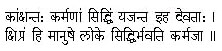
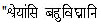
Glad to receive some letters from you. It gives me great pleasure to learn that Shashi and others are making a stir. We must create a stir, nothing short of this will do. You will be throwing the whole world into convulsion. Victory to the Guru! You know, “

–Great undertakings are always fraught with many obstacles.” It is these obstacles which knock and shape great characters. . . . Is it in the power of missionaries and people of that sort to withstand this shock? . . . Should a fool succeed where scholars have failed? It is no go, my boy, set your mind at ease about that. In every attempt there will be one set of men who will applaud, and another who will pick holes. Go on doing your own work, what need have you to reply to any party? “

–Truth alone triumphs, not falsehood. Through Truth lies Devayana, the path of gods” (Mundaka, III.i.6). Everything will come about by degrees.
Here in summer they go to the seaside: I also did the same. They have got almost a mania for boating and yachting. The yacht is a kind of light vessel which everyone, young and old, who has the means, possesses. They set sail in them every day to the sea, and return home, to eat and drink and dance–while music continues day and night. Pianos render it a botheration to stay indoors!
I shall now tell you something of the Hales to whose address you direct my letters. He and his wife are an old couple, having two daughters, two nieces, and a son. The son lives abroad where he earns a living. The daughters live at home. In this country, relationship is through the girls. The son marries and no longer belongs to the family, but the daughter’s husband pays frequent visits to his father-in-law’s house. They say,

“Son is son till he gets a wife;
The daughter is daughter all her life.”

All the four are young and not yet married. Marriage is a very troublesome business here. In the first place, one must have a husband after one’s heart. Secondly, he must be a moneyed man. . . . They will probably live unmarried; besides, they are now full of renunciation through my contact and are busy with thoughts of Brahman!
The two daughters are blondes, that is, have golden hair, while the two nieces are brunettes, that is, of dark hair. They know all sorts of occupations. The nieces are not so rich, they conduct a kindergarten school; but the daughters do not earn. Many girls of this country earn their living. Nobody depends upon others. Even millionaires’ sons earn their living; but they marry and have separate establishments of their own. The daughters call me brother; and I address their mother as mother. All my things are at their place; and they look after them, wherever I may go. Here the boys go in search of a living while quite young; and the girls are educated in the universities. So you will find that in a meeting there will be ninety-nine per cent of girls. The boys are nowhere in comparison with them.
There are a good many spiritualists in this country. The medium is one who induces the spirit. He goes behind a screen; and out of this come ghosts of all sizes and all colours. I have witnessed some cases; but they seemed to be a hoax. I shall test some more before I come to a final conclusion. Many of the spiritualists respect me.
Next comes Christian Science. They form the most influential party, nowadays, figuring everywhere. They are spreading by leaps and bounds, and causing heart-burn to the orthodox. They are Vedantins; I mean, they have picked up a few doctrines of the Advaita and grafted them upon the Bible. And they cure diseases by proclaiming “So’ham So’ham”–“I am He! I am He!”–through strength of mind. They all admire me highly.Nowadays the orthodox section of this country are crying for help. “Devil worship” 46 is but a thing of the past. They are mortally afraid of me and exclaim, “What a pest? Thousands of men and women follow him! He is going to root out orthodoxy!” Well, the torch has been applied and the conflagration that has set in through the grace of the Guru will not be put out. In course of time the bigots will have their breath knocked out of them. . . .
The Theosophists have not much power. But they, too, are dead set against the orthodox section.
The Christian Science is exactly like our Kartabhaja 47 sect: Say, “I have no disease”, and you are whole; and say, “I am He”–“So’ham”–and you are quits–be at large. This is a thoroughly materialistic country. The people of this Christian land will recognise religion if only you can cure diseases, work miracles, and open up avenues to money; and they understand little of anything else. But there are honourable exceptions. . . .
People here have found a new type of man in me. Even the orthodox are at their wit’s end. And people are now looking up to me with an eye of reverence. Is there a greater strength than that of Brahmacharya–purity, my boy?
I am now busy writing a reply to the Madras Address, which was published in all the newspapers here and created a sensation. If it be cheap, I shall send it in print, but if dear, I shall send a type-written copy. To you also I shall send a copy; have it published in the Indian Mirror. The unmarried girls of this country are very good and have a good deal of self-respect. . . . These (the people) are come of Virochana’s race. To them ministering to the body is a great thing: they would trim and polish and give their whole attention to that. A thousand instruments for paring nails, ten thousand for hair-cutting, and who can count the varieties of dress and toilet and perfumery? . . . They are good-natured, kind, and truthful. All is right with them, but that enjoyment is their God. It is a country where money flows like a river, with beauty as its ripple and learning its waves, and which rolls in luxury.

“Longing for success in action, in this world, (men) worship the deities. For success is quickly attained through action in this world of man” (Gita, IV.12).
Here you have a wonderful manifestation of grit and power–what strength, what practicality, and what manhood! Horses huge as elephants are drawing carriages that are as big as houses. You may take this as a specimen of the gigantic proportions in other things also. Here is a manifestation of tremendous energy. . . . They look with veneration upon women, who play a most prominent part in their lives. Here this form of worship has attained its perfection–that is the long and the short of it. But to come to the point. Well, I am almost at my wit’s end to see the women of this country! They take me to the shops and everywhere, as if I were a child. They do all sorts of work–I cannot do even a sixteenth part of what they do. They are like Lakshmi (the Goddess of Fortune), in beauty, and like Sarasvati (the Goddess of Learning) in virtues–they are the Divine Mother incarnate and worshipping them, one verily attains perfection in everything. Great God! Are we to be counted among men? If I can raise a thousand such Madonnas, Incarnations of the Divine Mother, in our country before I die, I shall die in peace. Then only will your countrymen become worthy of their name. . . .
I am really struck with wonder to see the women here. How gracious the Divine Mother is on them! Most wonderful women, these! They are about to corner the men, who have been nearly worsted in the competition. It is all through Thy grace, O Mother! . . . I shall not rest till I root out this distinction of sex. Is there any sex-distinction in the Atman (Self)? Out with the differentiation between man and woman–all is Atman! Give up the identification with the body, and stand up! Say, “Asti, Asti”–“Everything is!”–cherish positive thoughts. By dwelling too much upon “Nasti, Nasti”–“It is not! It is not!” (negativism), the whole country is going to ruin! “So’ham, So’ham, Shivo’ham”–“I am He! I am He! I am Shiva!” What a botheration! In every soul is infinite strength; and should you turn yourselves into cats and dogs by harbouring negative thoughts? Who dares to preach negativism? Whom do you call weak and powerless? “Shivo’ham, Shivo’ham”–“I am Shiva! I am Shiva!” I feel as if a thunderbolt strikes me on the head when I hear people dwell on negative thoughts. That sort of self-depreciating attitude is another name for disease–do you call that humility? It is vanity in disguise! “

–The external badge does not confer spirituality. It is same-sightedness to all beings which is the test of a liberated soul.”

(It is, It is),”

“–“I am He!”, “I am Shiva, of the essence of Knowledge and Bliss!” “

–He frees himself from the meshes of this world as a lion from its cage!”

–This Atman is not accessible to the weak”. . . . Hurl yourselves on the world like an avalanche–let the world crack in twain under your weight! Hara! Hara! Mahadeva!

–One must save the self by one’s own self”–by personal prowess.
. . . Will such a day come when this life will go for the sake of other’s good? The world is not a child’s play–and great men are those who build highways for others with their heart’s blood. This has been taking place through eternity, that one builds a bridge by laying down his own body, and thousands of others cross the river through its help. “Be it so! Be it so! I am Shiva! I am Shiva!”
It is welcome news that Madras is in a stir.
Were you not going to start a paper or something of that sort, what about that? We must mix with all, and alienate none. All the powers of good against all the powers of evil–this is what we want. Do not insist upon everybody’s believing in our Guru. . . . You shall have to edit a magazine, half Bengali and half Hindi–and if possible, another in English. . . . It won’t do to be roaming aimlessly. Wherever you go, you must start a permanent preaching centre. Then only will people begin to change. I am writing a book. As soon as it is finished, I run for home! . . . Always remember that Shri Ramakrishna came for the good of the world–not for name or fame. Spread only what he came to teach. Never mind his name–it will spread of itself. Directly you insist on everybody’s accepting your Guru, you will be creating a sect, and everything will fall to the ground–so beware! Have a kind word for all–it spoils work to show temper. Let people say whatever they like, stick to your own convictions, and rest assured, the world will be at your feet. They say, “Have faith in this fellow or that fellow”, but I say, “Have faith in yourself first”, that’s the way. Have faith in yourself–all power is in you–be conscious and bring it out. Say, “I can do everything.” “Even the poison of a snake is powerless if you can firmly deny it.” Beware! No saying “nay”, no negative thoughts! Say, “Yea, Yea,” “So’ham, So’ham”–“I am He! I am He!”

“What makes you weep, my friend? In you is all power. Summon up your all-powerful nature, O mighty one, and this whole universe will lie at your feet. It is the Self alone that predominates, and not matter.”

To work, with undaunted energy! What fear! Who is powerful enough to thwart you!

“We shall crush the stars to atoms, and unhinge the universe. Don’t you know who we are? We are the servants of Shri Ramakrishna.” Fear?

Whom to fear, forsooth?


“It is those foolish people who identify themselves with their bodies, that piteously cry, ‘We are weak, we are low.’ All this is atheism. Now that we have attained the state beyond fear, we shall have no more fear and become heroes. This indeed is theism which we, the servants of Shri Ramakrishna, will choose.
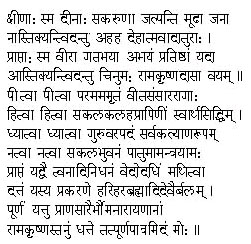
“Giving up the attachment for the world and drinking constantly the supreme nectar of immortality, for ever discarding that self-seeking spirit which is the mother of all dissension, and ever meditating on the blessed feet of our Guru which are the embodiment of all well-being, with repeated salutations we invite the whole world to participate in drinking the nectar.
“That nectar which has been obtained by churning the infinite ocean of the Vedas, into which Brahma, Vishnu, Shiva, and the other gods have poured their strength, which is charged with the life-essence of the Avataras–Gods Incarnate on earth–Shri Ramakrishna holds that nectar in his person, in its fullest measure!”
We must work among the English educated young men.

“Through renunciation alone some (rare ones) attained immortality.” Renunciation!–Renunciation!–you must preach this above everything else. There will be no spiritual strength unless one renounces the world. . . .
Why are Baburam and Yogen suffering so much? It is owing to their negative, their self-abasing spirit. Tell them to brush aside their illness by mental strength, and in an hour it will disappear! I the Atman smitten with disease! Off with it! Tell them to meditate for an hour at a stretch, “I am the Atman, how can I be affected by disease!”–and everything will vanish. Think all of you that you are the infinitely powerful Atman, and see what strength comes out. . . . Self-depreciation! What is it for? I am the child of the Infinite, the all-powerful Divine Mother. What means disease, or fear, or want to me? Stamp out the negative spirit as if it were a pestilence, and it will conduce to your welfare in every way. No negative, all positive, affirmative. I am , God is , everything is in me. I will manifest health, purity, knowledge, whatever I want. Well, these foreign people could grasp my teachings, and you are suffering from illness owing to your negative spirit! Who says you are ill–what is disease to you? Brush it aside!

“Thou art Energy, impart energy unto me. Thou art Strength, impart strength unto me. Thou art Spirituality, impart spirituality unto me. Thou art Fortitude, impart fortitude unto me!” The ceremony of steadying the seat (Asana-Pratishtha) that you perform every day when you sit down to worship the Lord-

–One must think of oneself as strong and invulnerable,” and so forth–what does it all mean? Say, “Everything is in me, and I can manifest it at will.” Repeat to yourself that such and such are Atman, that they are infinite, and how can they have any disease? Repeat this an hour or so, on a few successive days, and all disease and trouble will vanish into nought.
Yours ever,
Vivekananda

26th September 1894

To Isabelle McKindley

BOSTON,
26th Sept, 1894.
DEAR SISTER

Your letter with the India mail just to hand. A quantity of newspaper clippings were sent over to me from India. I send them back for your perusal and safe keeping.
I am busy writing letters to India last few days. I will remain a few days more in Boston.
With my lose and blessings,

Yours ever affly.,

VIVEKANANDA.

To Mrs. Ole (Sarah Chapman) Bull

Boston
26th Sept., 1894
Dear Mrs. Bull,
I have received both of your kind notes. I will have to go back to Melrose on Saturday and remain there till Monday. On Tuesday I will come over to your place. But I have forgotten the exact location. If you kindly write me that, I cannot express my gratitude for your kindness. For that is exactly what I wanted, a quiet place to write. Of course, much less space will suffice me then what you have kindly proposed to put at my disposal, I can bundle myself up anywhere and feel quite comfortable.
Yours very sincerely,
Vivekananda

27th September, 1894

To Alasinga Perumal

U.S.A.
27th September, 1894
Dear Alasinga,

. . . One thing I find in the books of my speeches and sayings published in Calcutta. Some of them are printed in such a way as to savour of political views; whereas I am no politician or political agitator. I care only for the Spirit–when that is right everything will be righted by itself. . . . So you must warn the Calcutta people that no political significance be ever attached falsely to any of my writings or sayings. What nonsense! . . . I heard that Rev. Kali Charan Banerji in a lecture to Christian missionaries said that I was a political delegate. If it was said publicly, then publicly ask the Babu for me to write to any of the Calcutta papers and prove it, or else take back his foolish assertion. This is their trick! I have said a few harsh words in honest criticism of Christian governments in general, but that does not mean that I care for, or have any connection with politics or that sort of thing. Those who think it very grand to print extracts from those lectures and want to prove that I am a political preacher, to them I say, “Save me from my friends.” . . .
. . . Tell my friends that a uniform silence is all my answer to my detractors. If I give them tit for tat, it would bring us down to a level with them. Tell them that truth will take care of itself, and that they are not to fight anybody for me. They have much to learn yet, and they are only children. They are still full of foolish golden dreams–mere boys!
. . . This nonsense of public life and newspaper blazoning has disgusted me thoroughly. I long to go back to the Himalayan quiet.

Ever yours affectionately,
Vivekananda

To Mrs. G. W. Hale

Hotel Bellevue
Beacon Street, Boston
27 September 1894
Dear Mother,
The bundles all came safely. One was newspapers from India. The other was the short sketch of my Master published by Mr. Mazumdar long ago. In the latter bundle there are two sextos or pamphlets. One, my Master’s sketch; the other, a short extract to show how what Mr. [Keshab] Chandra Sen and [Pratap Chandra] Mazumdar preached as their “New Dispensa-tion” was stolen from my Master’s life. The latter therefore you need not distribute, but I hope you will distribute my Master’s life to many good people.
I beg you to send some to Mrs. Guernsey, Fishkill on the Hudson, N.Y.; Mrs. Arthur Smith and Mrs. [Miss Mary A.] Phillips, 19 West 38th Street, New York (both); to Mrs. Bagley, Annisquam, Mass.; and Prof. J. Wright, Professor of Greek, Harvard, Mass.
The newspapers–you may do whatever you like, and I hope you will send any newspaper scrap you get about me to India.
Yours etc.,
Vivekananda

To Alasinga Perumal

U.S.A.
29th September, 1894
Dear Alasinga,

You all have done well, my brave unselfish children. I am so proud of you. . . . Hope and do not despair. After such a start, if you despair you are a fool. . . .
Our field is India, and the value of foreign appreciation is in rousing India up. That is all. . . . We must have a strong base from which to spread. . . . Do not for a moment quail. Everything will come all right. It is will that moves the world.
You need not be sorry, my son, on account of the young men becoming Christians. What else can they be under the existing social bondages, especially in Madras? Liberty is the first condition of growth. Your ancestors gave every liberty to the soul, and religion grew. They put the body under every bondage, and society did not grow. The opposite is the case in the West–every liberty to society, none to religion. Now are falling off the shackles from the feet of Eastern society as from those of Western religion.
Each again will have its type; the religious or introspective in India, the scientific or out-seeing in the West. The West wants every bit of spirituality through social improvement. The East wants every bit of social power through spirituality. Thus it was that the modern reformers saw no way to reform but by first crushing out the religion of India. They tried, and they failed. Why? Because few of them ever studied their own religion, and not one ever underwent the training necessary to understand the Mother of all religions. I claim that no destruction of religion is necessary to improve the Hindu society, and that this state of society exists not on account of religion, but because religion has not been applied to society as it should have been. This I am ready to prove from our old books, every word of it. This is what I teach, and this is what we must struggle all our lives to carry out. But it will take time, a long time to study. Have patience and work. %redaTmnaTmanm!
–Save yourself by yourself.

Yours etc.,
Vivekananda

PS. The present Hindu society is organised only for spiritual men, and hopelessly crushes out everybody else. Why? Where shall they go who want to enjoy the world a little with its frivolities? Just as our religion takes in all, so should our society. This is to be worked out by first understanding the true principles of our religion and then applying them to society. This is the slow but sure work to be done.