Why I think India should rally behind Swami Vivekananda?

Recently I was on a long journey with my US returned friend who asked me whether I have studied any other person in depth as I have done with Swami Vivekananda. He also wanted to know why I think Swami Vivekananda has the maximum influence and why he is ‘the’ role model.

I feel it is a good question to attend to, for some of my own conceptions will become clear, and secondly, this is something that I wanted to go deeply into.  The debate is about whether Swami Vivekananda is the Role Model for India and whether we should all follow in his footsteps and whether it is the best thing for us.

My answer is an ‘Yes’ and I have my reasons for it. There is no doubt that India had many people of great spiritual attainments. That has been our History. Our history is full of sages who attained to highest spiritual perfection. Our whole national life was centered around the concept of Moksha.  I am not going to compare Swami Vivekananda’s spiritual attainments with that of other great spiritual men. From a social perspective, that debate is not needed and I am not qualified to do that either. Our debate is about the Man, his Life, his Teachings and the method He formulated to build the India and the Humanity of the future.

Swami Vivekananda as a Person
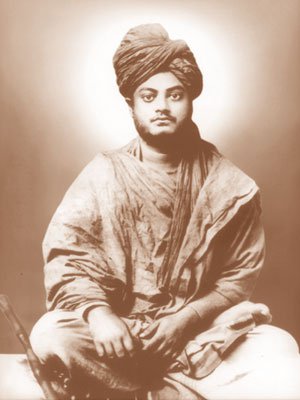
svAs a person, Swami Vivekananda was very just, gracious, accommodating, liberal, compassionate and scientific. It can be said that these qualities were manifest in him in the fullest measure.

There are instances in his life wherein if he had just said that He was not a Negro, he would have got his food served in a Hotel and a barber would cut his Hair, two services that were denied to him in US many times taking him to be a Negro. But he never wanted to raise at the expense of another.  Such was his love and respect for human dignity, an ideal great in itself for the future of mankind. I can’t believe that 113 years since he passed away still we can’t get over this superiority and ‘holier than thou’ ideas. Think of a man who was honored by the Kings, by the greatest of scientists and philosophers of the East and the West talking to construction workers enquiring about their lives and serving food to them with his own hands and shedding tears thinking of their upliftment! He wouldn’t sleep and would say to his followers, “This world is burning in misery, how can you sleep?.” Can there be a better ideal for the Society? I am not discussing religion or even spirituality as it is understood but about what we require to grow as a nation.

Those people who are immersed in selfishness, who never think even one good thought for others will never believe that there was a man who lived solely for others and whose actions were for the good of the world.  Swami Vivekananda was such a man. That is a great ideal for everyone to have. Just think of the great good that can happen to the country if people possess such a spirit.

Swami Vivekananda as a nation builder

You don’t start a new creation. The creation is there, scattered all around.  India had an history dating back to thousands of years and had its own reasons for all the good and the bad that was there in our Society. There arose Swami Vivekananda who took the path that would cause least unrest in the Society, the path which he chose to call as the “line of least resistance” which was in tune with our national life. He didn’t disturb the equilibrium that we had but gave it a new inspiration. He only said, “Brothers! We have done well in the past. But let us do better.” He had no words of condemnation for this Society but only Help. We get great revolutionaries every now and then who start a movement and who try to address an issue or two but nation builders like Swami Vivekananda address all issues – religious, educational, scientific and humanitarian.  So they naturally cover a much larger ground than the issue based revolutionaries. He made character as the underlying foundation for all the great undertakings, combined science with religion which would lead to harmonious development of all sides in a person. His message -“Help and not fight,” “Assimilation and not Destruction,” “Harmony and Peace and not Dissension.”, is something that the humanity and our nation in particular needs very badly today.

My friend gave me an example of Osho who has given wonderful thoughts about Society. I know we have many books which give us most wonderful theories but such books never reach people. Swami Vivekananda was practical. He reached out to the people and gave out noble ideas in all directions possible and for all eternity. Therein lies a big difference between Swami Vivekananda and other great people.

Swami Vivekananda

Swami Vivekananda at work


The biggest contribution of Swami Vivekananda to India was in setting up a channel which is playing a critical  role in shaping the destiny of this country. He was one of those earliest leaders who took it upon himself to rebuild India. He went deep into history, understood current challenges and devised a plan for the nation’s future – a plan that is definitely seeing the light of the day.  It was him who inspired JRD Tata to start a Science Institute in India which is now known as the Indian Institute of Science in Bengaluru. His whole mission was to build an army of youth who would go about solving the problems of our land. There is an Institute in Allong in Arunachal Pradesh where the Ramakrishna Mission started by Swami Vivekananda is educating the tribal children, there is an institute in H D Kote, Mysore which has educated and brought into the mainstream of life, the whole tribal community. This institution was inspired by Swami Vivekananda. There are countless examples. Today, if I visit even the remotest corners of India, I can see the influence of Swami Vivekananda in most of these places. Remember – this is an unfinished task. But the force is becoming all the more stronger.  When the full effect of his thought and labor are manifest, India would have become a nation that he dreamt of and that we all could be proud of.  Such is the power of these great prophets – they conceive a thing and set up a machinery to accomplish that task and they invariably succeed in their mission.  There are countless Hospitals, Schools, Computer Training centers, vocational training centers and what not!  Just think, one person starts a school in a village and in about 20 years, a noticeable change will come in the life of villagers.  Here was a man who has inspired the founding of thousands of schools and hundreds of health care centers, the numbers are only going up, think of his contribution to this great country and how he has, once for all, defined the destiny of our country.

Anna_Hazare

Anna Hazare who played a prominent role in many social reforms considers Swami Vivekananda as his Guru and inspiration

Dr. R Balasubramaniam who is spearheading a social transformation movement across the country has derived his inspiration from Swami Vivekananda

There are other things like the quality of people whom he has been able to engage in his mission –  Qualified Doctors, Engineers, PhD holders and people like Anna Hazare who stand above all by the sheer virtue of their character. Getting such large number of educated and committed people to build the country is the way of building a great nation. He was not antagonistic to other religions and nations. He wanted all the religions and nations to share what good they have with others and live in harmony. He was the embodiment of the future ideal of Humanity.  I see some people going to the extremes of denying science and some to the extreme of denying religion and both fancy that they alone are right. They don’t seem to have the basic understanding that by excluding a thing which many people have found to be true and verifiable, be it religion or science, they are going away from the ideal of universal brotherhood. Swami Vivekananda struck the right chord when he said what we want is Western Science, the comforts that it can bring with the ideal of Vedanta, the spiritual ideal of oneness.

Patriotism, love of humanity, scientific temper, compassion and reaching out to people to help them lead a better life – very few people are born who can conceive of such a great mission and it appears to me that aligning ourselves with such a man as Swami Vivekananda and his mission is one of the better things that we can do for our country and to this world. The effect of our little labor can be associated with that great mission and the results can be verified and we would have played our part.

Courage of conviction

From our childhood, we are all told to be truthful and honest. Tacitly, each of us know what is right and what is wrong. Our parents, our family members and our teachers are always exhorting us to speak the truth. As we grow up, this same environment also demonstrates to us that one needs to be truthful and honest only when it is convenient to us. When being truthful starts causing us discomfort, it becomes the first casualty. It is rare that we see somebody who holds on to the truth for truth’s sake. It is these remarkable persons who have the courage of conviction who change the course of history. Whether it is Mahatma Gandhi or Swami Vivekananda, their love for the truth was legendary. Swami Vivekananda always mentioned that “Truth does not pay homage to anyone, it is the Society that always pays homage to the Truth”.

I am reminded of an incident that took place in young Narendra’s life when he was in school. He was a master story-teller and when he spoke, his friends listened with rapt attention. He was narrating something animatedly to his friends in school. In the meanwhile, the teacher had entered the classroom and started his teaching. The students were all absorbed in Narendra’s story and did not pay attention to the teacher’s lesson. The teacher heard the whispering and was annoyed. He asked the students to explain what he was teaching. None except Narendra could answer. Narendra’s mind was capable of working simultaneously in two planes. He could tell his friends the story and concentrate on what was being taught in class. The teacher wanted to know who had been talking and disturbing his class. All the students pointed towards Narendra, but the teacher refused to believe this. He punished all the students except Narendra by asking them to stand on the bench. Narendra also joined his friends and stood up. The teacher asked him to sit down as he could not believe that Narendra could have been disturbing the class. But Narendra replied “No Sir, I must also stand up because it was I who was talking to them”. He could not be a silent spectator when his friends were being punished for his mistake. He was also clear that he had to be punished as he was the one who was the cause of the disturbance in the class. The inconvenience and discomfort of the punishment would not deter him for standing by the truth.

Incidents like these give us a window into Swami Vivekananda’s constant search for truth from his childhood itself. He once thundered, “Truth alone triumphs, not untruth. Through truth alone lies the way to the Gods. Those who think that a little sugar-coating of untruth helps the spread of the truth are mistaken and will find in the long run that a single drop of poison will poison the whole mass…”

Kannada version in Prajavani (05-Apr-12)

Ridicule, Opposition and finally Acceptance…

Chakravarti Rajagopalachari had this to say of the great patriot saint: “Swami Vivekananda saved Hinduism, and saved India. But for him we would have lost our religion and would not have gained our freedom. We therefore owe everything to Swami Vivekananda. May his faith, his courage and his wisdom ever inspire us so that we may keep safe the treasure we have received from him.” In a letter to T.S.Avinashilingam, Mahatma Gandhi wrote on 22nd July 1941, “Surely Swami Vivekananda’s writings need no introduction from anybody. They make their own irresistible appeal.”

Anyone reading through the writings of Swami Vivekananda cannot but be inspired to take on the cause of National Reconstruction. Many a young freedom fighter including Netaji Subash Chandra Bose owed their inspiration to the writings of Swamiji. Many people of the present generation owe our entire work to the message of Swami Vivekananda. Swamiji has said, “Life is short, give it up to a great cause.” Such strong inspirational statements can make us jump into action. It is only after we begin to understand the complexities of society and its response to our work will reality sink in. It is during those times that one very practical statement of Swamiji helped me. He mentions, “All good work must pass through three stages – Ridicule, Opposition and finally will come Acceptance.”

I was 19 years old when under such an inspiration, I had founded the Swami Vivekananda Youth Movement. It was during those times that I felt that one could achieve anything that one set out to do. We were running a weekly dispensary in a village near Mysore and would go there every Sunday. While I had expected that my friends and well-wishers would wholeheartedly support me in this work, I found ridicule instead. People ascribed all kinds of selfish reasons for our work. They would mock us as we left the medical college hostel with boxes of medicines for the rural dispensary. It was not difficult for one to feel deflated and demotivated.

Many years later, as the work gathered momentum and we were living in the tribal area, we faced so much opposition. There were many vested interests in the Government, other NGOs and amongst the community itself who felt that our presence was an irritant. They did everything possible to keep us off. From smear campaigns to getting us arrested, to threats of getting us beaten – everything was tried but we would not buckle. Opposition ended up strengthening our resolve to persevere. After all, the exploiters would not like their exploitation to be exposed.

Gradually as support for our work grew, we found attitudes too changing. Today we are respected and admired for our work and we are beginning to find the acceptance that Swami Vivekananda wrote about. Now I can see new meaning in what Swamiji said. I now realize that it is not the ridicule, opposition or acceptance of society or anybody external that matters. Swamiji possibly spoke of something higher. While it is easy to be affected by the outside world, what truly matters is how we see our work and ourselves. It is so easy to ridicule ourselves and create opposition for our ideals in our own mind. Opposition comes in very subtle forms – it could be our own egoistic desire to be in control, to seek name and fame for what we are doing and to fall prey to the temptation of becoming the ‘provider’. It is only when we are able to see ourselves as instruments of a higher power through which good work gets done, will we able to stay rested with the feeling of ‘Acceptance’.

Kannada version in Prajavani (12-Apr-12)

Watching out for the ego

One of the great challenges for people engaged in social work is the slow and insidious growth of our own ego. Most of us start out with high ideals and with the intent of finding ourselves in the work that we undertake. Little do we realize that we can actually lose ourselves in this attempt. Vivekananda had thought this through and had a piece of advice for such people. He had remarked, “Do not stand on a pedestal and say, ‘here my poor man, take my 5 cents’. Feel privileged that the poor man is there to give you an opportunity to serve him.”

As our engagement with society and its acceptance of our work grows, our attention gradually shifts away from the ‘work that is getting done’ to ‘we doing the work’. There have been times when newspapers write about our work or awards and recognitions come our way, we actually begin to think that we must be doing a lot of constructive work. From personal experience, I know the ease with which one can forget the real reason for embarking on such activities. Founding the Swami Vivekananda Youth Movement and undertaking the various service activities was the beginning of my own inner journey. For many years, I saw it as a platform for the outer expression of my own inner spiritual growth. As the activities grew, there was more visibility for the organization and those of us involved. Gradually, societal appreciation of the fact that there were hundreds of tribal and rural children studying in our schools and thousands of patients benefiting from our hospitals clouded this inner evolution. One started to believe the newspaper articles and television shows. To make matters worse, Veerappa Moily, the former Chief Minister of Karnataka wrote a book about a Jenukuruba boy and SVYM’s activities and made me the mentor of this central character. All this went into my head and I quietly forgot Vivekananda and his philosophy of detached and dispassionate service. It was then that another statement of Swamiji came to my mind. He says, “Remember the cow that gives birth to a calf also knows how to feed it. God knows how to take care of his creation. Feel not that you are responsible for all that is happening. On the other hand, feel happy that you are allowed to be his instrument.”

He continues, “All the hospitals you build, all the schools you construct can all get washed away in one flood or crumble to dust in one earthquake. So, do not think too much of yourself. What matters is not what you do, but how you do it. Service without motive is one of the highest forms of spiritual activity and always remember to work with the selflessness and dispassion that such a work demands.” To me, at a critical stage of my own growth, these statements seemed as though they were specifically written for me. These are indeed powerful messages for people in the social sector and we need to remember that our service will be enabling both for us and the people whom we work with, only when it is done in this spirit.

Kannada version in Prajavani (19-Apr-12)

Swami Vivekananda’s first public speech in the USA

The talk given by Swami Vivekananda at the Parliament of Religions in Chicago in September 1893 is now part of history. Most Indians relate Swamiji to this talk and historians agree that it was possibly a key milestone in introducing Swami Vivekananda to the world stage. Many also know of Prof Wright’s contribution in getting Swamiji an opportunity to attend and present his thoughts at this Parliament.

But very few people know of Swami Vivekananda’s first public discourse in the United States of America. It was August 25th, 1893 and many professors, artists, clergymen and writers from Boston and other cities including Chicago had come to a quite village called Annisquam on the Massachusetts coast. They were assembling in one of the village’s largest boarding houses called Miss Lane’s Boarding House which had many spacious rooms and a large dining room. People here were coming at the invitation of Professor John Henry Wright of Harvard University. Prof Wright had mentioned that he would be coming with a young Hindu monk whom he had recently met. He knew that he was in the presence of a force, the dimensions of which he could barely fathom but which had captivated him. The melodious voice, the leonine bearing, the spiritual glow in the great dark eyes of this young man of twenty-nine attracted all who approached him and when he spoke, there was a strange and compelling reverberation felt within all who heard him. Mrs Wright recording this visit to Annisquam wrote, “He walked with a strange, shambling gait, and yet there was a commanding dignity and impressiveness in the carriage of his neck and bare head that caused everyone in sight to stop and look at him; he moved slowly with the swinging tread of one who has never hastened, and in his great dark eyes was the beauty of an alien civilization…”

Annisquam Church

On that chilly Sunday, the Hindu monk was asked to speak at the Annisquam Universalist Church at the invitation of its pastor, Rev G W Penniman. Elva Nelson who researched this visit of Swami Vivekananda had this to say of his first public discourse in America. “It marked the beginning of his unprecedented work in the West. It was in this quiet village, Annisquam, from where ships had sailed to China and India before revolutionary times that another revolution was so quietly begun.” This first talk given on that Sunday in a little church was to mark the beginning of Swami Vivekananda’s work in the West. This heralded the approach of a spiritual storm which spread across the entire country. It lasted less than five years in all, but history will one day record how this quiet revolution was to lay the foundation for the beginning of the regeneration of people who were called upon to find their true inner selves.

Kannada version in Prajavani (03-May-12)

Swami Vivekananda in Mysore

Mysore has a special significance in the life and times of Swami Vivekananda. Apart from being associated with his visit here for 3-4 weeks in November 1892, it is also home to many individuals and organizations inspired by Swamiji’s message. Seshadri Iyer, the then Dewan of Mysore had heard of the young monk and was impressed by his wisdom and oration. He had invited him to the Kingdom of Mysore as his guest. Seshadri Iyer felt that Chamarajendra Wodeyar, the then Maharaja of Mysore would be interested in meeting him and introduced Swamiji to the King. The King was not only delighted on meeting him but also insisted that he stay in the palace itself. During his stay at the palace, Swamiji had discussions on Vedanta with the pundits, with an Austrian musician and other reputed persons apart from the many interactions that he had with the Maharaja himself.

An article in Vedanta Kesari mentions this anecdote that occurred during his stay in Mysore. One day, Swamiji was called to the apartments of the Prince and the Dewan went with him. The Maharaja asked, “Swamiji, what can I do for you?” Then the Swami, evading a direct reply, burst forth into an eloquent description of the contents of his mission. He spoke for more than an hour dwelling on the condition of India, saying that India’s possession was philosophical and spiritual, and that it stood in need of modern scientific ideas as well as a thorough social reform. The King listened spellbound. The Swami continued, saying that he felt it was India’s place to give what treasure it possessed to the people of the West and that he himself intended going to America to preach the Gospel of the Vedanta to the western nations. “And what I want”, he added, “is that the West shall help us in improving our material condition by providing us with the means of educating our people in the modern lines of agriculture, industries and other technical sciences.” He grew more and more eloquent as he spoke. And the prince promised, then and there, the necessary money to defray his traveling expenses; but for some reason, best known to himself, the Swami refused the generous offer of the Maharaja. From that day, the Prince and the Dewan regarded him as ‘the man born for the redemption of India’ and as one in whom was incarnate the nation’s spirit.

The longer the Swami remained with the Maharaja, the greater became the latter’s attachment and admiration for him. When the Swami spoke of departing, he was visibly distressed and requested him to stay a few days more. He added, “Swamiji, I must have something with me as a remembrance of your personality. So, allow me to take a phonographic record of your voice. Do speak some of your inspiring words into the phonograph, so that they may be with me always.” This the Swami consented to, and even now the record remains preserved in the Palace, though it has long become indistinct. In truth, so great was the admiration of this ruler for the Swami that he proposed to do padapuja to him (to worship his feet), but this the Swami did not allow him to do.

In a letter written to the Maharaja from Chicago, Swamiji writes, “…The one thing that is at the root of all evils in India is the condition of the poor. The poor in the West are devils; compared to them ours are angels, and it is therefore so much the easier to raise our poor. The only service to be done for our lower classes is to give them education, to develop their lost individuality. Give them ideas – that is the only help they require, and then the rest must follow as the effect. Ours is to put the chemicals together, the crystallization comes in the law of nature. My noble Prince, this life is short, the vanities of the world are transient, but they alone live who live for others, the rest are more dead than alive.”

After a brief stay at the Palace, the Swami moved to the ‘Niranjan Mutt’ near the residence of the Dewan. There is evidence to show that he not only stayed here but also gave lectures at the nearby Sadvidya Paatashala. Niranjan Mutt was till recently in a dilapidated condition and has been restored by the Ramakrishna Ashram and the Mysore City Corporation. Plans are afoot to build a fitting memorial for Swami Vivekananda here while retaining the restored Niranjan Mutt.

Kannada version in Prajavani (26-Apr-12)

Swami Vivekananda’s life and message as I see it…

This is an excerpt of the talk given at the Bharatiya Adhyatmika Sammilana at Sri Ramakrishna Vidyashala, Mysore on 23rd April 2012. Over 200 monks and 2000 delegates from the four southern states attended this 4-day event.

——

Revered Swamijis, fellow devotees and friends,

It is indeed a privilege and an extremely difficult task to stand before you and share with all of you a few thoughts on what Swami Vivekananda and his influential thought means to me. For the last three decades, ever since an accident of fate introduced Swamiji to me, I have been trying to understand and internalize him and his message. Each passing day demonstrates to me the enormity and complexity of this task. It was as a young, impressionable 17 year-old that I first came across Swamiji. I had just completed my 2nd PUC and having scored very high marks, was confident of getting into a college and course of my choice. Little was I to realize that fate had other plans for me and I was disappointed at not being able to do so. I settled for an engineering seat in BMS College in Bangalore and very hesitatingly attended the first day of college. I am indeed glad that I was subjected to very bad ragging on that day. It was so demotivating that I lost all courage to go to the college the next day. Coming from a typical middle class family, I had very little options and had to seek refuge in a place that was both safe and inexpensive. To my good fortune, the Ramakrishna Ashrama at Basavanagudi was next door to this college and it became my home for the next 2 months. I started visiting the library to be seen to be busy and serious, and also justify the love and food that the monks at the center showered on me. These two months was the time that I managed to read the complete works of Swami Vivekananda. I say ‘read’ very consciously as that is all I did. I neither understood nor realized anything of what was being said by Swamiji. It was like just opening a window and letting him in. The rest was left to the handiwork of this extraordinary phenomenon that I would like to call Swami Vivekananda. Two of his books – ‘His call to the Nation’ and ‘To the youth of India’ changed my life and were instrumental in me starting the Swami Vivekananda Youth Movement, two years later in 1984 as a medical student.

Thirty years down the road – how does one see Vivekananda and understand him? It is like asking someone to describe how sweet was the sweet that one has been eating! Language and words are inadequate to describe something that is indescribable. Vivekananda cannot by truly defined or described; he needs to be experienced. He means so many things to so many different people that description will surely be limited by one’s own personal experience and the subsequent interpretation. Is he the social reformer that I first saw him as, or the humanist that he subsequently became for me, or the manager par excellence who set up one of India’s greatest institutions, or a leader whose life is the closest definition that one can have of leadership itself, or is he the walking encyclopedia of Sanatana Dharma and spirituality or the perfect representative of India or a Saint or God himself? Asking one to define Swamiji is like asking a novice to describe time, space and causation. We will surely be limited by what we think we see. Swamiji to me is all this and something beyond. He is a force, a concept that gives meaning to the very purpose of human existence itself. He is something that one can only experience as one tries to give meaning to this mundane existence of ours. This experiential message of Swamiji is timeless, endless, limitless, ever relevant, and ever pragmatic. This ‘concept’ is not something that can be limited by geography or by the other limitations that a human mind can conceive of. This force can only be felt and experienced fully and meaningfully by surrendering oneself to the instrumentality called Swami Vivekananda.

Thank you,

Dr.R.Balasubramaniam

Kannada version in Prajavani (10-May-12)

Swami Vivekananda, the leader

This incident took place in 1895. The place was London. Swami Vivekananda was to give a public lecture and he had come to London with Swami Saradananda. When it was time to stand up and speak, Swami Vivekananda suddenly announced that Swami Saradananda would deliver the speech instead of him. Though taken by surprise, Saradananda did an excellent job that day, and thereafter too. Swami Vivekananda had realized that all Saradananda needed was a little push to bolster his self-confidence. This incident in isolation may not say much, but we need to see it from the perspective of the leadership and management style of Swami Vivekananda.

Swamiji was not only an inspirational leader, but was also a very pragmatic one. He not only believed in ‘Servant-based Leadership’ but constantly endeavored to empower all those around him. In dealing with his brother-disciples and followers, he evoked what is today popularly known in the management world as the ‘Pygmalion Effect’. Management expert J. Sterling Livingston describes it as the effect of enabling subordinates to excel in response to the leader’s expectation of them. Swami Vivekananda had a high expectation of his followers and he communicated that to them clearly, thus eliciting a high level of performance. Leaders empower their followers by believing in them, and they rise to greatness as a result. The leaders make themselves larger by enlarging others. The leader constantly aims at moving people around him from dependence to independence to the state of inter-dependence. Swami Vivekananda had chosen ’empower and facilitate’ philosophy over ‘command and control’ long before modern management realized its potential. Trust plays an important part in the process. If the leader does not trust his followers, he will use control instead of empowerment. Swami Vivekananda while exhorting his disciples to the highest levels of work had the fullest trust in them and their abilities. His urge to motivate people around him to aspire for higher levels of performance can be seen from this letter of his to his direct disciple Swami Shuddhananda in 1897. He writes, “…Lastly, you must remember i expect more from my children than from my brethren (his brother disciples). I want each one of my children to be a hundred times greater than i could ever be. Every one of you must be a giant – must, this is my word. Obedience, readiness, and love for the cause – if you have these three, nothing can hold you back.”

This also shows Swamiji’s interpersonal skills and the ability to motivate and develop people. One can even say that Swamiji’s call, “Arise, Awake and stop not till the goal is reached” was nothing but an attempt to empower people en-masse. J Carla Nortcutt had once said, “The goal of many leaders is to get people to think more highly of the leader. The goal of a great leader is to help people to think more highly of themselves.” This is perhaps the best description of Swami Vivekananda, the greatest leader of our times.

Kannada version in Prajavani (17-May-12)

The challenge of living off alms

Running a social-service organization necessitates that one constantly indulges in fund raising. One is forced to meet all kinds of people and ask them for support and money. The responses of people are varied. Some are very supportive and open up their purses immediately. Some politely turn your request down while others make no bones about their dislike of you and your request. There have been times when people make you feel small and like a beggar and these are the times when you feel like giving up. One feels frustrated and fatigued by this and thoughts of giving up on the ideal of service begin to grow.

Swami Vivekananda too went through situations where the ideal of seeking bhiksha (for food) challenged him. He once felt that going from place to place begging for food was after all not helping him attain his goal of seeking self-realization. In this state of dejection, he had once written to one of his brother disciples, “I am going about taking food at others’ houses shamelessly and without the least compunction, like a crow.” On that occasion he decided that he would beg no more and thought “Let me beg no longer. What benefit is it to the poor to feed me? If they can save a handful of rice, they can feed their own children with it. Anyway, what is the use of sustaining this body if I cannot realize God?” Great seekers of truth are known to go through a deep sense of spiritual dissatisfaction and this happened to Swamiji too. In an ascetic mood, he decided to go into a forest and like a rishi of the olden days let his body drop from starvation and exhaustion. He entered a thick forest and walked many miles the whole day without food. By the evening, he was tired and felt like fainting. He sank to the ground under a tree and fixing his mind on the Lord, looked vacantly into the distance.

After some time he saw a tiger approaching. It came nearer and sat at some distance from him. He thought, “Ah, this is right; both of us are hungry. This life has been no good for the world. It is well and desirable that it should at least be of service to this hungry beast.” He was reclining there all the while, calm and motionless, waiting for the tiger to pounce on him at any moment; but for some reason the animal made off on its own accord. Swamiji thought it might come back and waited there, but the tiger did not return. He spent that night in the jungle communing with his own soul. As dawn approached, a sense of great power came upon him. He went through several such experiences during his wandering life. In one of his lectures later in California, he said “Many times I have been in the jaws of death, starving, footsore, and weary. For days and days I had no food, and often could walk no further. I would sink down under a tree, and life would seem to be ebbing away. I could not speak, I could scarcely think but at last the mind reverted to the idea: I have no fear nor death; never was I born, never did I die; I never hunger or thirst. I am it! I am it!…Arise and walk and stop not. And I would rise up, reinvigorated; and here I am today, living!”

Swamiji would urge his disciples to assert the reality whenever such darkness came. He maintained that it was all but a dream. He writes, “Mountain high though the difficulties appear, terrible and gloomy though all things seem, they are but Maya. Fear not, and it is banished. Crush it and it vanishes. Stamp upon it and it dies.”

Kannada version in Prajavani (24-May-12)

Selfless service…

Swami Vivekananda always spoke about the need to serve. For him ‘Service’ was not merely an act done out of compassion but was a tool for one’s own self-realization. The need of the hour for India was to address the issues of poverty, ignorance and illiteracy. In combining the ideal of ‘Service’ and Sacrifice’, Swamiji ensured that one’s personal ideal of spiritual evolution could find meaning in working for societal progress and welfare. He knew that in the ideal of Service we could find solutions for many of our national problems. As one thinks of this, one wrestles with the question of not just the concept of service, but also whether ‘Selfless Service’ is possible and desirable. Can one truly serve others around him with no thought of himself or his own personal welfare? Can one in the context of today’s India, where the reigning philosophy is ‘every man for himself’, be truly unselfish? How does one go about it in a practical way negotiating through the complex reality of today’s materialistic existence?

In Swamiji’s message lies a very practical way of going about this. He talks about first building ourselves – not just physically, but also intellectually and emotionally. He made a case for each individual to first prepare himself for the task ahead. Though this ‘individualistic’ approach sounds contradictory to the concept of selfless service, it is only an essential first step towards looking at the larger picture. What Vivekananda wanted was to first build our own selves and strengthen our resolve so that we are prepared for the challenges that lie ahead of us. He wanted our outlook to grow and progress centrifugally – beginning first with ourselves and gradually encompassing those immediately around us. He wanted us to move outwards to look at our neighbours, people living in our village, our town, our district and so on. As we grow in our abilities and capabilities, so should our sphere of service grow. He wanted it to grow and expand till one embraced entire humanity itself. Though it may sound abstract and impossible, this is possibly an excellent road map for all those who embark on service. Each one needs to undertake activities based on one’s own ability.

As one continues to serve, so will our abilities expand. In proportion to our expanding capabilities, we need to reach out to more and more people and serve them unconditionally. In our world, in which every action is undertaken with an undercurrent of reciprocity, we need to be mindful of not expecting anything in return for any act of service that we do. This can be done only when we undertake such action with the internalization that we are not the doer and that we are only an instrument through which service is getting done. Going beyond feeling like a provider, we need to constantly tell ourselves that we serve because it is in our nature to do so. We should seek neither recognition nor affirmation for our acts. Undertaking such action in order to evolve spiritually is also being conditional and will not qualify as selfless service. One should not even expect that the good we do will have its own positive consequences. Such an attitude is indeed difficult to sustain and being mindful of ourselves and our actions is the only way of undertaking it.

Kannada version in Prajavani (31-May-12)