Cleansing Hinduism of Superstitions

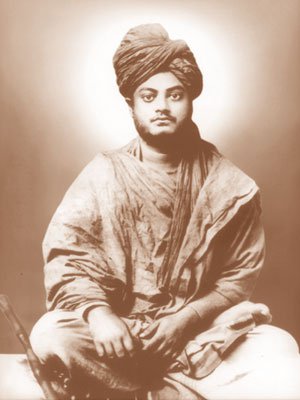
Swami Vivekananda was one of the greatest reformers of Hindu religion. While he strongly upheld the greatness of Hinduism and protected it against all missionary influences, he was brave enough to concede that Hinduism needs a cleansing especially of its superstitions and evil practices.  He said in his lecture in Madras,

We must not forget that what I mean by the conquest of the world by spiritual thought is the sending out of the life-giving principles, not the hundreds of superstitions that we have been hugging to our breasts for centuries. These have to be weeded out even on this soil, and thrown aside, so that they may die for ever. These are the causes of the degradation of the race and will lead to softening of the brain. That brain which cannot think high and noble thoughts, which has lost all power of originality, which has lost all vigour, that brain which is always poisoning itself with all sorts of little superstitions passing under the name of religion, we must beware of.

Further, he says,

Here in India, there are several dangers. Of these, the two, Scylla and Charybdis, rank materialism and its opposite arrant superstition, must be avoided. There is the man today who after drinking the cup of Western wisdom, thinks that he knows everything. He laughs at the ancient sages. All Hindu thought to him is arrant trash — philosophy mere child’s prattle, and religion the superstition of fools. On the other hand, there is the man educated, but a sort of monomaniac, who runs to the other extreme and wants to explain the omen of this and that. He has philosophical and metaphysical, and Lord knows what other puerile explanations for every superstition that belongs to his peculiar race, or his peculiar gods, or his peculiar village. Every little village superstition is to him a mandate of the Vedas, and upon the carrying out of it, according to him, depends the national life. You must beware of this. I would rather see every one of you rank atheists than superstitious fools, for the atheist is alive and you can make something out of him. But if superstition enters, the brain is gone, the brain is softening, degradation has seized upon the life. Avoid these two. Brave, bold men, these are what we want. What we want is vigour in the blood, strength in the nerves, iron muscles and nerves of steel, not softening namby-pamby ideas. Avoid all these. Avoid all mystery. There is no mystery in religion.

Do the superstitions followed in Hinduism have the sanction of our Rishis and Sastras? No, he says

Vain delusion! Where indeed is that the case nowadays? Nowhere have I found the laws of the Rishis current in India, even when during my travels I searched carefully and thoroughly. The blind and not unoften meaningless customs sanctioned by the people, local prejudices and ideas, and the usages and ceremonials prevalent amongst women, are what really govern society everywhere! How many care to read the Shâstras or to lead society according to their ordinances after careful study?

To a question of Child marriage he says,

Amongst the educated classes in Bengal, the custom of marrying their boys too early is dying out gradually. The girls are also given in marriage a year or two older than before, but that has been under compulsion — from pecuniary want. Whatever might be the reason for it, the age of marrying girls should be raised still higher. But what will the poor father do? As soon as the girl grows up a little, every one of the female sex, beginning with the mother down to the relatives and neighbours even, will begin to cry out that he must find a bridegroom for her, and will not leave him in peace until he does so! And, about your religious hypocrites, the less said the better. In these days no one hears them, but still they will take up the role of leaders themselves. The rulers passed the Age of Consent Bill prohibiting a man under the threat of penalty to live with a girl of twelve years, and at once all these so-called leaders of your religion raised a tremendous hue and cry against it, sounding the alarm, “Alas, our religion is lost! As if religion consisted in making a girl a mother at the age of twelve or thirteen! So the rulers also naturally think, “Goodness gracious! What a religion is theirs! And these people lead political agitations and demand political rights!”

It is quite clear from his thoughts that certain practices in Hinduism need to go. These practices are not advised by our sages nor have the sanction of our Sastras.
Why I think India should rally behind Swami Vivekananda?

Recently I was on a long journey with my US returned friend who asked me whether I have studied any other person in depth as I have done with Swami Vivekananda. He also wanted to know why I think Swami Vivekananda has the maximum influence and why he is ‘the’ role model.

I feel it is a good question to attend to, for some of my own conceptions will become clear, and secondly, this is something that I wanted to go deeply into.  The debate is about whether Swami Vivekananda is the Role Model for India and whether we should all follow in his footsteps and whether it is the best thing for us.

My answer is an ‘Yes’ and I have my reasons for it. There is no doubt that India had many people of great spiritual attainments. That has been our History. Our history is full of sages who attained to highest spiritual perfection. Our whole national life was centered around the concept of Moksha.  I am not going to compare Swami Vivekananda’s spiritual attainments with that of other great spiritual men. From a social perspective, that debate is not needed and I am not qualified to do that either. Our debate is about the Man, his Life, his Teachings and the method He formulated to build the India and the Humanity of the future.

Swami Vivekananda as a Person

svAs a person, Swami Vivekananda was very just, gracious, accommodating, liberal, compassionate and scientific. It can be said that these qualities were manifest in him in the fullest measure.

There are instances in his life wherein if he had just said that He was not a Negro, he would have got his food served in a Hotel and a barber would cut his Hair, two services that were denied to him in US many times taking him to be a Negro. But he never wanted to raise at the expense of another.  Such was his love and respect for human dignity, an ideal great in itself for the future of mankind. I can’t believe that 113 years since he passed away still we can’t get over this superiority and ‘holier than thou’ ideas. Think of a man who was honored by the Kings, by the greatest of scientists and philosophers of the East and the West talking to construction workers enquiring about their lives and serving food to them with his own hands and shedding tears thinking of their upliftment! He wouldn’t sleep and would say to his followers, “This world is burning in misery, how can you sleep?.” Can there be a better ideal for the Society? I am not discussing religion or even spirituality as it is understood but about what we require to grow as a nation.

Those people who are immersed in selfishness, who never think even one good thought for others will never believe that there was a man who lived solely for others and whose actions were for the good of the world.  Swami Vivekananda was such a man. That is a great ideal for everyone to have. Just think of the great good that can happen to the country if people possess such a spirit.

Swami Vivekananda as a nation builder

You don’t start a new creation. The creation is there, scattered all around.  India had an history dating back to thousands of years and had its own reasons for all the good and the bad that was there in our Society. There arose Swami Vivekananda who took the path that would cause least unrest in the Society, the path which he chose to call as the “line of least resistance” which was in tune with our national life. He didn’t disturb the equilibrium that we had but gave it a new inspiration. He only said, “Brothers! We have done well in the past. But let us do better.” He had no words of condemnation for this Society but only Help. We get great revolutionaries every now and then who start a movement and who try to address an issue or two but nation builders like Swami Vivekananda address all issues – religious, educational, scientific and humanitarian.  So they naturally cover a much larger ground than the issue based revolutionaries. He made character as the underlying foundation for all the great undertakings, combined science with religion which would lead to harmonious development of all sides in a person. His message -“Help and not fight,” “Assimilation and not Destruction,” “Harmony and Peace and not Dissension.”, is something that the humanity and our nation in particular needs very badly today.

My friend gave me an example of Osho who has given wonderful thoughts about Society. I know we have many books which give us most wonderful theories but such books never reach people. Swami Vivekananda was practical. He reached out to the people and gave out noble ideas in all directions possible and for all eternity. Therein lies a big difference between Swami Vivekananda and other great people.

Swami Vivekananda

Swami Vivekananda at work


The biggest contribution of Swami Vivekananda to India was in setting up a channel which is playing a critical  role in shaping the destiny of this country. He was one of those earliest leaders who took it upon himself to rebuild India. He went deep into history, understood current challenges and devised a plan for the nation’s future – a plan that is definitely seeing the light of the day.  It was him who inspired JRD Tata to start a Science Institute in India which is now known as the Indian Institute of Science in Bengaluru. His whole mission was to build an army of youth who would go about solving the problems of our land. There is an Institute in Allong in Arunachal Pradesh where the Ramakrishna Mission started by Swami Vivekananda is educating the tribal children, there is an institute in H D Kote, Mysore which has educated and brought into the mainstream of life, the whole tribal community. This institution was inspired by Swami Vivekananda. There are countless examples. Today, if I visit even the remotest corners of India, I can see the influence of Swami Vivekananda in most of these places. Remember – this is an unfinished task. But the force is becoming all the more stronger.  When the full effect of his thought and labor are manifest, India would have become a nation that he dreamt of and that we all could be proud of.  Such is the power of these great prophets – they conceive a thing and set up a machinery to accomplish that task and they invariably succeed in their mission.  There are countless Hospitals, Schools, Computer Training centers, vocational training centers and what not!  Just think, one person starts a school in a village and in about 20 years, a noticeable change will come in the life of villagers.  Here was a man who has inspired the founding of thousands of schools and hundreds of health care centers, the numbers are only going up, think of his contribution to this great country and how he has, once for all, defined the destiny of our country.

Anna_Hazare

Anna Hazare who played a prominent role in many social reforms considers Swami Vivekananda as his Guru and inspiration

Dr. R Balasubramaniam who is spearheading a social transformation movement across the country has derived his inspiration from Swami Vivekananda

There are other things like the quality of people whom he has been able to engage in his mission –  Qualified Doctors, Engineers, PhD holders and people like Anna Hazare who stand above all by the sheer virtue of their character. Getting such large number of educated and committed people to build the country is the way of building a great nation. He was not antagonistic to other religions and nations. He wanted all the religions and nations to share what good they have with others and live in harmony. He was the embodiment of the future ideal of Humanity.  I see some people going to the extremes of denying science and some to the extreme of denying religion and both fancy that they alone are right. They don’t seem to have the basic understanding that by excluding a thing which many people have found to be true and verifiable, be it religion or science, they are going away from the ideal of universal brotherhood. Swami Vivekananda struck the right chord when he said what we want is Western Science, the comforts that it can bring with the ideal of Vedanta, the spiritual ideal of oneness.

Patriotism, love of humanity, scientific temper, compassion and reaching out to people to help them lead a better life – very few people are born who can conceive of such a great mission and it appears to me that aligning ourselves with such a man as Swami Vivekananda and his mission is one of the better things that we can do for our country and to this world. The effect of our little labor can be associated with that great mission and the results can be verified and we would have played our part.

The greatness of Buddha

Swami Vivekananda no doubt considered Buddha as the perfected being.  Often he would put Amoeba at the lower end of evolution and Buddha at the higher end thereby effectively assigning to Buddha the highest position to which a man can attain to.  Once he said that, As a Character, Buddha is the greatest the world has ever seen.  He had the vision of Lord Buddha when he was a child.  Once he remarked that if he had lived in the times of Buddha he would have washed his feet not with his tears but with his heart’s blood. Following is the collection of some of his thoughts on Lord Buddha.

—

Let me tell you in conclusion a few words about one man who actually carried this teaching of Karma-Yoga into practice. That man is Buddha. He is the one man who ever carried this into perfect practice. All the prophets of the world, except Buddha, had external motives to move them to unselfish action. The prophets of the world, with this single exception, may be divided into two sets, one set holding that they are incarnations of God come down on earth, and the other holding that they are only messengers from God; and both draw their impetus for work from outside, expect reward from outside, however highly spiritual may be the language they use. But Buddha is the only prophet who said, “I do not care to know your various theories about God. What is the use of discussing all the subtle doctrines about the soul? Do good and be good. And this will take you to freedom and to whatever truth there is.” He was, in the conduct of his life, absolutely without personal motives; and what man worked more than he? Show me in history one character who has soared so high above all. The whole human race has produced but one such character, such high philosophy, such wide sympathy. This great philosopher, preaching the highest philosophy, yet had the deepest sympathy for the lowest of animals, and never put forth any claims for himself. He is the ideal Karma-Yogi, acting entirely without motive, and the history of humanity shows him to have been the greatest man ever born; beyond compare the greatest combination of heart and brain that ever existed, the greatest soul-power that has even been manifested. He is the first great reformer the world has seen. He was the first who dared to say, “Believe not because some old manuscripts are produced, believe not because it is your national belief, because you have been made to believe it from your childhood; but reason it all out, and after you have analysed it, then, if you find that it will do good to one and all, believe it, live up to it, and help others to live up to it.” He works best who works without any motive, neither for money, nor for fame, nor for anything else; and when a man can do that, he will be a Buddha, and out of him will come the power to work in such a manner as will transform the world. This man represents the very highest ideal of Karma-Yoga.

(Karma Yoga – The ideal)


He (Buddha) was the only man who was ever ready to give up his life for animals to stop a sacrifice. He once said to a king, “If the sacrifice of a lamb helps you to go to heaven, sacrificing a man will help you better; so sacrifice me.” The king was astonished. And yet this man was without any motive power. He stands as the perfection of the active type, and the very height to which he attained shows that through the power of work we can also attain to the highest spirituality.

To many the path becomes easier if they believe in God. But the life of Buddha shows that even a man who does not believe in God, has no metaphysics, belongs to no sect, and does not go to any church, or temple, and is a confessed materialist, even he can attain to the highest. We have no right to judge him. I wish I had one infinitesimal part of Buddha’s heart. Buddha may or may not have believed in God; that does not matter to me. He reached the same state of perfection to which others come by Bhakti — love of God — Yoga, or Jnâna. Perfection does not come from belief or faith. Talk does not count for anything. Parrots can do that. Perfection comes through the disinterested performance of action.

Buddha was more brave and sincere than any teacher. He said: “Believe no book; the Vedas are all humbug. If they agree with me, so much the better for the books. I am the greatest book; sacrifice and prayer are useless.” Buddha was the first human being to give to the world a complete system of morality. He was good for good’s sake, he loved for love’s sake.

“I have a superstition — it is nothing, you know, but a personal superstition! — that the same soul who came once as Buddha came afterwards as Christ.”

Go thou and follow Him (Buddha), who was born and gave His life for others five hundred times before He attained the vision of the Buddha!”

Hinduism cannot live without Buddhism, nor Buddhism without Hinduism. Then realise what the separation has shown to us, that the Buddhists cannot stand without the brain and philosophy of the Brahmins, nor the Brahmin without the heart of the Buddhist. This separation between the Buddhists and the Brahmins is the cause of the downfall of India. That is why India is populated by three hundred millions of beggars, and that is why India has been the slave of conquerors for the last thousand years. Let us then join the wonderful intellect of the Brahmins with the heart, the noble soul, the wonderful humanising power of the Great Master.

The Lord once more came to you as Buddha and taught you how to feel, how to sympathise with the poor, the miserable, the sinner, but you heard Him not. Your priests invented the horrible story that the Lord was here for deluding demons with false doctrines! True indeed, but we are the demons, not those that believed. And just as the Jews denied the Lord Jesus and are since that day wandering over the world as homeless beggars, tyrannised over by everybody, so you are bond-slaves to any nation that thinks it worth while to rule over you. Ah, tyrants! you do not know that the obverse is tyranny, and the reverse slavery. The slave and the tyrant are synonymous.  (Letter to Alasinga Perumal)

The state of being a Buddha is superior to the heavenly positions of many a Brahmâ or an Indra, who vie with each other in offering their worship at the feet of the Buddha, the God-man! And to this Buddhahood, every man has the privilege to attain; it is open to all even in this life.

Listen to Buddha’s message — a tremendous message. It has a place in our heart. Says Buddha, “Root out selfishness, and everything that makes you selfish. Have neither wife, child, nor family. Be not of the world; become perfectly unselfish.” A worldly man thinks he will be unselfish, but when he looks at the face of his wife it makes him selfish. The mother thinks she will be perfectly unselfish, but she looks at her baby, and immediately selfishness comes. So with everything in this world. As soon as selfish desires arise, as soon as some selfish pursuit is followed, immediately the whole man, the real man, is gone: he is like a brute, he is a slave’ he forgets his fellow men. No more does he say, “You first and I afterwards,” but it is “I first and let everyone else look out for himself.”

Swami Vivekananda’s description of Buddha’s death and its similarity with that of Shri Ramakrishna’s:

He told how the blanket had been spread for him beneath the tree and how the Blessed One had lain down, “resting on his right side like a lion” to die, when suddenly there came to him one who ran for instruction. The disciples would have treated the man as an intruder, maintaining peace at any cost about their Master’s death-bed, but the Blessed One overheard, and saying, “No, no! He who was sent (Lit., “the Tathâgata”. “A word”, explained Swami Vivekananda, “which is very like your ‘Messiah’”.) is ever ready”, he raised himself on his elbow and taught. This happened four times and then, and then only, Buddha held himself free to die. “But first he spoke to reprove Ananda for weeping. The Buddha was not a person but a realization, and to that any one of them might attain. And with his last breath he forbade them to worship any.”

The immortal story went on to its end. But to one who listened, the most significant moment had been that in which the teller paused — at his own words “raised himself on his elbow and taught” — and said, in brief parenthesis, “I saw this, you know, in the case of Ramakrishna Paramahamsa”. And there rose before the mind the story of one, destined to learn from that teacher, who had travelled a hundred miles, and arrived at Cossipore only when he lay dying. Here also the disciples would have refused admission, but Shri Ramakrishna intervened, insisting on receiving the new-comer, and teaching him. (CWSN 1: 175-176)


Thoughts on Democracy

Swami Vivekananda saw everything in the light of evolution of man. He was attracted to Democracy. He based Ramakrishna Math and Mission’s foundation on strong democratic principles. But he exercised caution in the beginning as it can be seen from these lines.

“The conviction has grown in my mind after all my travels in various lands that no great cause can succeed without an organisation. In a country like ours, however, it does not seem quite practicable to me to start an organisation at once with a democratic basis or work by general voting. People in the West are more educated in this respect, and less jealous of one another than ourselves. They have learnt to respect merit. Take for instance my case. I was just an insignificant man there, and yet see how cordially they received and entertained me. When with the spread of education the masses in our country grow more sympathetic and liberal, when they learn to have their thoughts expanded beyond the limits of sect or party, then it will be possible to work; on the democratic basis of organization. For this reason it is necessary to have a dictator for this Society. Everybody should obey him, and then in time we may work on the principle of general voting.” (C.W. Volume 6)

He linked Democracy to spiritual thought. When he taught the impersonal God of Vedanta which is immanent in every individual to the westerners, he drew comparison with the principles of Vedanta and and the principles of Democracy. He could also see that just as India of that time couldn’t move away from Kings, they could also not accept an impersonal God as a whole. But for westerners who embraced democracy, he said,

“India cannot give up his majesty the king of the earth — that is why Vedanta cannot become the religion of India. There is a chance of Vedanta becoming the religion of your country because of democracy. But it can become so only if you can and do clearly understand it, if you become real men and women, not people with vague ideas and superstitions in your brains, and if you want to be truly spiritual, since Vedanta is concerned only with spirituality.”

Further, a very ennobling idea,

“You want to be democratic in this country. It is the democratic God that Vedanta teaches.” (C.W. Volume 8)

In another talk, he gave a much deeper idea of democracy,

“Men must have education. They speak of democracy, of the equality of all men, these days. But how will a man know he is equal with all? He must have a strong brain, a clear mind free of nonsensical ideas; he must pierce through the mass of superstitions encrusting his mind to the pure truth that is in his inmost Self. Then he will know that all perfections, all powers are already within himself, that these have not to be given him by others. When he realises this, he becomes free that moment, he achieves equality. He also realises that every one else is equally as perfect as he, and he does not have to exercise any power, physical, mental or moral, over his brother men. He abandons the idea that there was ever any man who was lower than himself. Then he can talk of equality; not until then.” (C.W. Volume 8)

To a question on Indian Freedom Movement and the salvation of India, Swamiji seems to have been convinced of democracy as the way. He gave a most beautiful expression of democracy in these words.

“It will certainly end in the working out of India’s homogeneity, in her acquiring what we may call democratic ideas. Intelligence must not remain the monopoly of the cultured few; it will be disseminated from higher to lower classes. Education is coming, and compulsory education will follow. The immense power of our people for work must be utilised. India’s potentialities are great and will be called forth” (C.W. Volume 5)

He was so much convinced about the power of democracy that he said it will be the American method of democracy that will give freedom to the lower sections of the society everywhere. To this effect Sister Nivedita recalls,

“Another morning he began by observing that as there were four main castes — Brahmin, Kshatriya, Bâniyâ [Vaishya], Shudra — so there were four great national functions: the religious or priestly, fulfilled by the Hindus; the military, by the Roman Empire; the mercantile, by England today; and the democratic, by America in the future. And here he launched off into a glowing prophetic forecast of how America would yet solve the problems of the Shudra — the problems of freedom and co-operation — and turned to relate to a non-American listener the generosity of the arrangements which that people had attempted to make for their aborigines.” (C.W. Volume 9)

So it’s very clear that Swami Vivekananda held democracy in very regard. But he also believed that people should be made ready for democracy before the democratic rights are given to them.

Did the Hindus eat beef in the past?

That’s a question which no modern Hindu wants to look back upon today. But Swami Vivekananda, a person who never hesitated to see the History as it was, does say that the Hindus took beef in the past.  Let me quote some instances where he has said that.

“You will be astonished if I tell you that, according to the old ceremonials, he is not a good Hindu who does not eat beef. On certain occasions he must sacrifice a bull and eat it. ” ( Complete Works Volume 3. Buddhistic India)

Again,

“There was a time in this very India when, without eating beef, no Brahmin could remain a Brahmin; you read in the Vedas how, when a Sannyasin, a king, or a great man came into a house, the best bullock was killed; how in time it was found that as we were an agricultural race, killing the best bulls meant annihilation of the race. Therefore the practice was stopped, and a voice was raised against the killing of cows. Sometimes we find existing then what we now consider the most horrible customs.“(Complete Works Volume 3. Reply to the Address at Madura)

And to a question whether beef eating was immoral,

Every man, in every age, in every country is under peculiar circumstances. If the circumstances change, ideas also must change. Beef-eating was once moral. The climate was cold, and the cereals were not much known. Meat was the chief food available. So in that age and clime, beef was in a manner indispensable. But beef-eating is held to be immoral now.

(Complete Works Volume 6. Notes taken down at Chennai)

There is an instance in his Life when a family with whom he was staying in the US stopped serving beef in their home when Swamiji was there. This disappointed a kid in their home. When he told Swamiji that he like beef streaks, the Swami personally took him into a restaurant which served beef streaks.

(Source: Swami Vivekananda in the West: New Discoveries)

These are all historically recorded facts. To say that Swamiji was not well informed in these matters is just a fanciful way of looking at one’s own ancestry. We should accept the facts as they were but be always open to change according to the needs of time.